
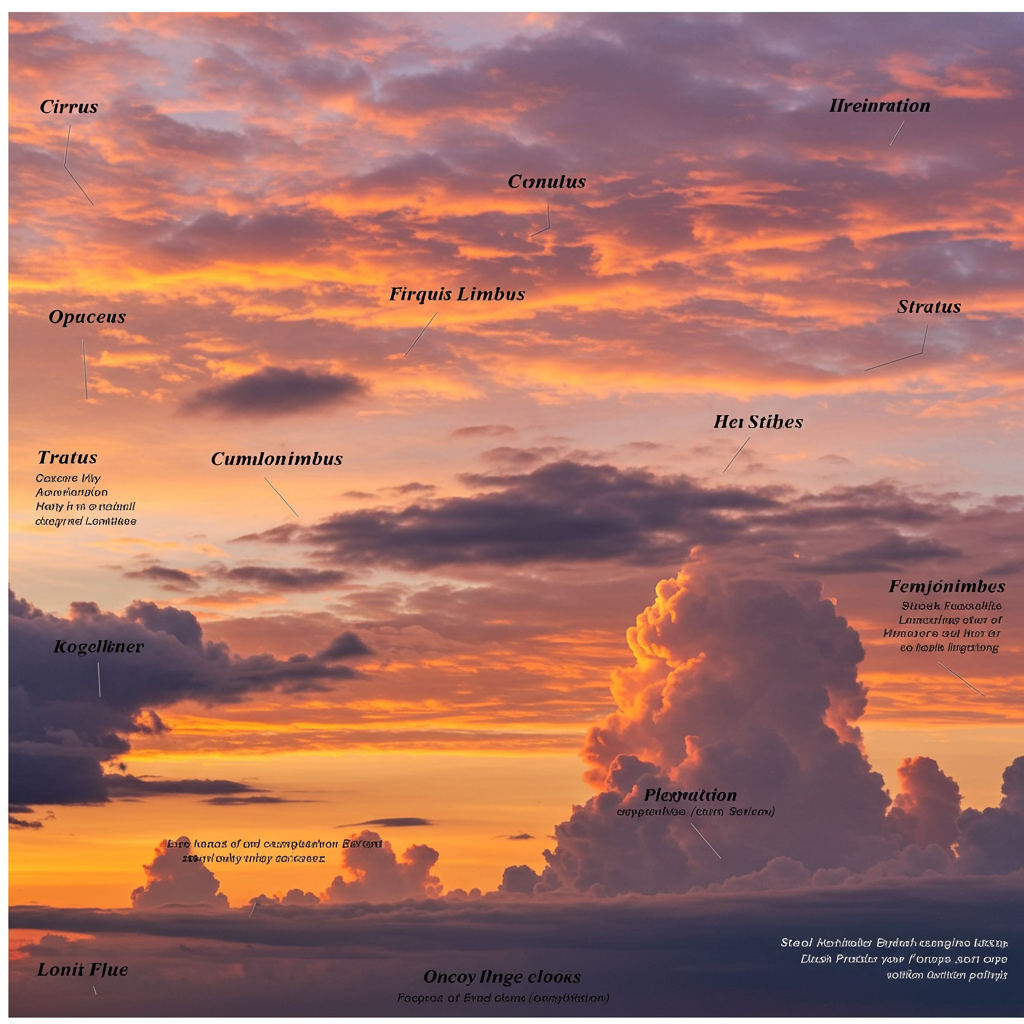
Have you ever gazed up at the sky, captivated by the ever-shifting canvas of clouds? Cloud watching, often dismissed as a childhood pastime, is a surprisingly rich and rewarding activity. It connects us to the natural world, fosters a sense of wonder, and even offers glimpses into the intricate workings of our atmosphere. This article explores the joy and science behind this accessible yet profound practice, offering you the tools to become an amateur sky interpreter.
From the wispy tendrils of cirrus clouds, hinting at approaching weather changes, to the imposing cumulonimbus formations that herald dramatic thunderstorms, each cloud type tells a story. Understanding these stories begins with learning the basic cloud classifications. Cumulus clouds, for example, are those fluffy, cotton-ball-like clouds that often grace sunny skies. Their flat bases and rounded tops indicate rising air currents. Contrast this with stratus clouds, which appear as a uniform gray layer, often obscuring the sun and signifying stable atmospheric conditions.
Learning to identify cloud types is like learning a new language – the language of the sky. A high altitude veil of cirrus clouds, composed of ice crystals, can foretell an approaching warm front. Meanwhile, the dark, brooding presence of nimbostratus clouds promises persistent rain or snow. By observing these patterns, you gain a deeper understanding of the forces shaping our weather.
Beyond meteorology, cloud watching offers a unique opportunity for mindfulness and contemplation. The slow, graceful movements of clouds across the sky can be incredibly soothing, providing a much-needed respite from the hustle and bustle of daily life. Simply finding a comfortable spot, looking up, and allowing your mind to wander amongst the clouds can be a powerful stress reliever. Let your imagination take flight, interpreting the shapes and patterns you see – perhaps a dragon, a castle, or a face peering down from the heavens.
Cloud watching also provides a tangible connection to the vastness of the atmosphere. These seemingly ephemeral formations are in fact immense collections of water droplets or ice crystals, suspended miles above the earth’s surface. Contemplating their scale and the dynamic processes that create and dissipate them can foster a sense of awe and wonder about the natural world.
So, next time you find yourself with a few moments to spare, take a look up. Engage all your senses. Feel the breeze on your face, smell the fresh air, and observe the ever-changing drama unfolding above. With a little practice, you’ll not only become a more astute observer of the sky but also gain a deeper appreciation for the beauty and complexity of our planet’s atmosphere. Unlock the secrets hidden within the clouds and discover the joy of sky interpretation – a rewarding pursuit for all ages.