
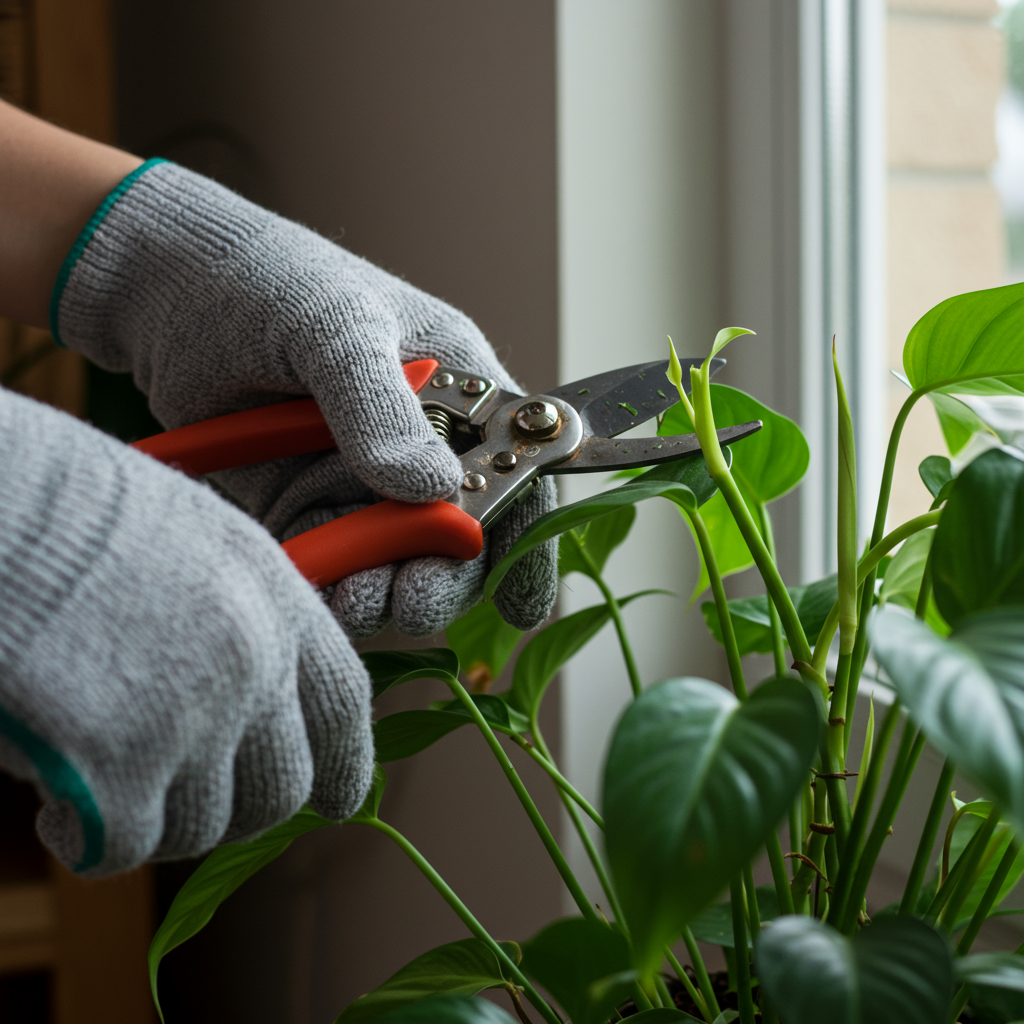
Pruning, often perceived as an act of subtraction, is paradoxically the key to unlocking a plant’s full potential. It’s a horticultural art form that promotes vigorous growth, enhances flowering and fruiting, and shapes plants into aesthetically pleasing forms. This article delves into the world of pruning, providing you with the knowledge and techniques to empower your green companions to flourish.
Understanding the ‘why’ behind pruning is crucial. Beyond aesthetics, pruning removes dead, diseased, or damaged branches, preventing the spread of infections and improving overall plant health. It also stimulates new growth by redirecting the plant’s energy towards healthy shoots. Furthermore, pruning allows for better air circulation and light penetration, reducing the risk of fungal diseases and promoting even growth.
Timing is everything when it comes to pruning. Different plants have different pruning requirements. For instance, spring-flowering shrubs like lilacs should be pruned immediately after flowering, as pruning later in the season would remove the next year’s flower buds. Summer-flowering shrubs, on the other hand, benefit from pruning in late winter or early spring before new growth emerges. Fruit trees often require specific pruning techniques depending on the species and desired outcome.
The tools of the trade are equally important. Sharp, clean pruning shears are essential for making clean cuts that heal quickly. Loppers are useful for thicker branches, while pruning saws are necessary for larger limbs. Always sterilize your tools with rubbing alcohol or a bleach solution between plants to prevent the spread of disease.
Mastering the techniques of pruning involves understanding where and how to make cuts. Generally, cuts should be made just above a bud that is facing in the desired direction of growth. Avoid leaving stubs, as these can become entry points for disease. When removing a large branch, make a three-cut approach to prevent tearing the bark.
Pruning can seem daunting, but with practice and patience, it becomes an intuitive process. Start with simpler pruning tasks, like deadheading spent flowers, and gradually progress to more complex pruning techniques. Observing your plants, understanding their growth habits, and applying the principles outlined here will empower you to prune with confidence, nurturing healthier, more vibrant, and beautifully shaped plants.
Finally, remember that less is often more. Over-pruning can stress a plant and hinder its growth. When in doubt, it’s always best to err on the side of caution and make smaller, more conservative cuts. With the right knowledge and a little practice, you can harness the power of pruning to transform your garden into a thriving oasis.