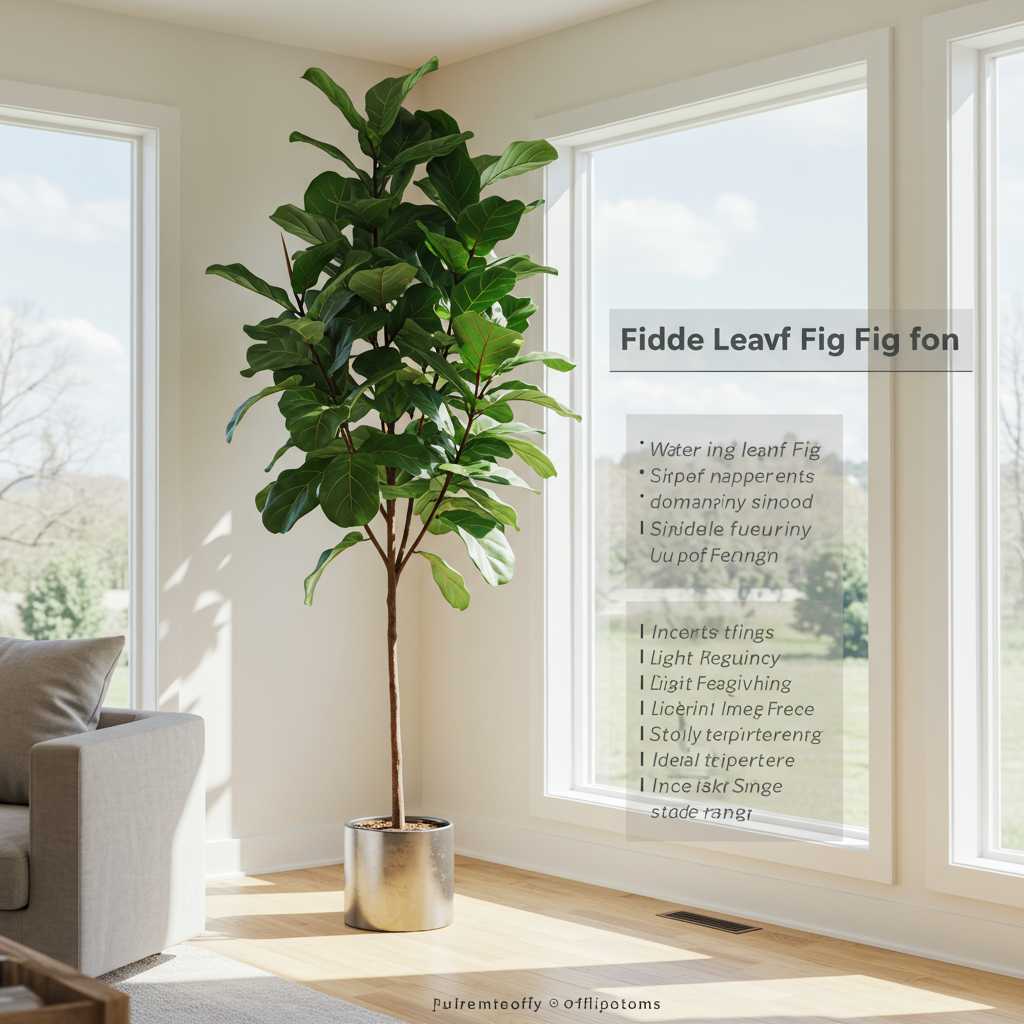
The fiddle leaf fig (Ficus lyrata), with its broad, violin-shaped leaves, has become a ubiquitous symbol of modern interior design. Its sculptural presence adds a touch of effortless chic to any space, but achieving that effortless look requires a bit of finesse. This guide delves into the art of fiddle leaf fig care, providing you with the knowledge to nurture this trendy tree and enjoy its lush beauty for years to come.
One of the most common challenges with fiddle leaf figs is leaf drop. This dramatic shedding can often be attributed to inconsistent watering. Rather than adhering to a strict schedule, focus on understanding the plant’s needs. Water thoroughly when the top inch or two of soil feels dry to the touch. Avoid letting the soil completely dry out, as this can stress the plant and lead to leaf loss. Equally detrimental is overwatering, which can suffocate the roots and cause root rot. Proper drainage is essential – ensure your pot has drainage holes and use a well-draining potting mix.
Light is another crucial factor in fiddle leaf fig happiness. These plants thrive in bright, indirect light. Avoid placing them in direct sunlight, which can scorch their delicate leaves. A spot near a north- or east-facing window is often ideal. If you notice your fig leaning towards the light source, rotate the pot regularly to encourage even growth. Remember, these plants are sensitive to changes in their environment. Moving your fig to a new location can cause temporary stress, potentially leading to leaf drop. Try to find a suitable spot and keep it there as much as possible.
Beyond watering and light, humidity plays a significant role in maintaining the health of your fiddle leaf fig. These plants originate from tropical rainforests and appreciate a humid environment. You can increase humidity around your plant by grouping it with other plants, placing it on a tray filled with pebbles and water, or using a humidifier. Regularly wiping down the leaves with a damp cloth not only removes dust but also provides a boost of humidity.
Finally, while fiddle leaf figs are relatively low-maintenance once their needs are met, occasional fertilization during the growing season (spring and summer) can encourage healthy growth. Use a balanced liquid fertilizer diluted to half strength and apply it every 4-6 weeks. Avoid fertilizing during the dormant season (fall and winter).
Mastering the art of fiddle leaf fig care requires patience, observation, and a touch of intuition. By understanding the plant’s basic needs and responding to its subtle cues, you can cultivate a thriving fiddle leaf fig that adds a touch of botanical elegance to your home.