
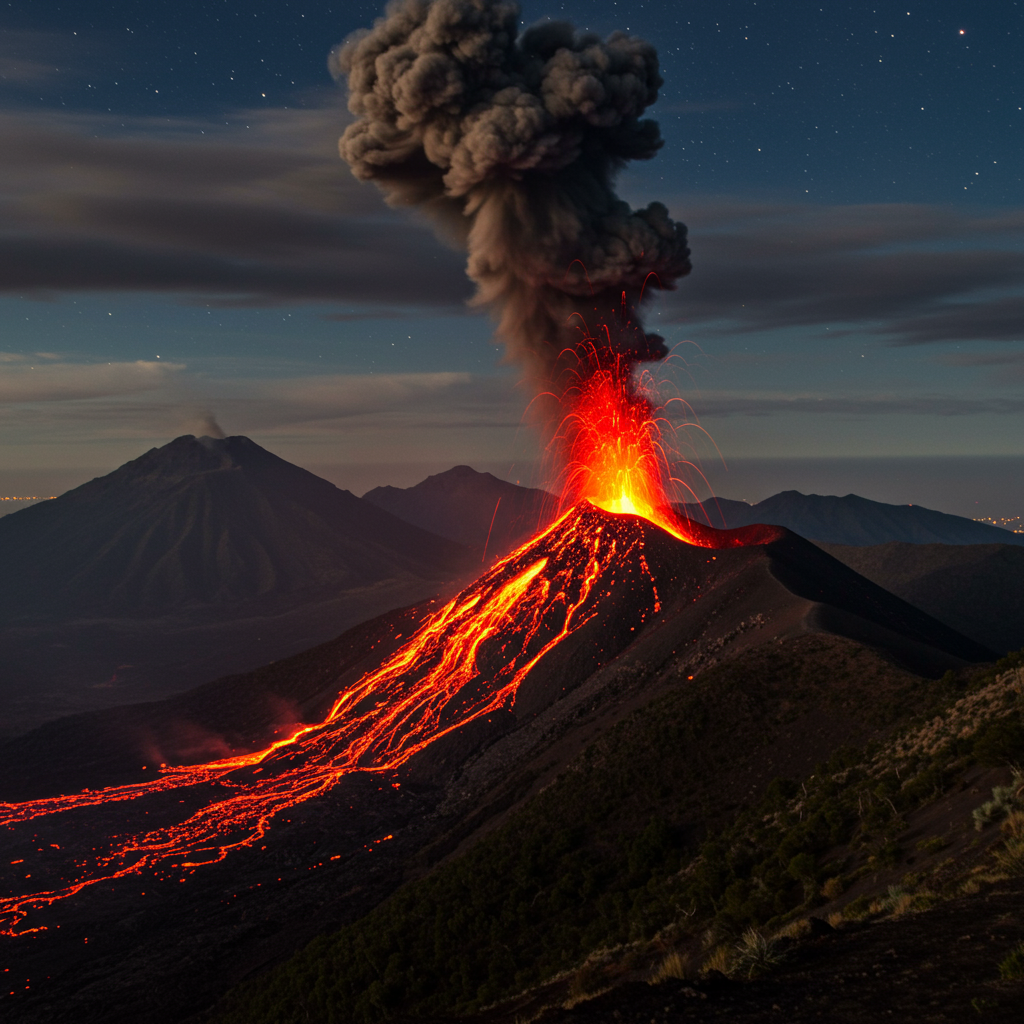
Volcanoes, awe-inspiring displays of Earth’s raw power, have captivated humanity for millennia. These geological giants, forged in the planet’s fiery depths, shape landscapes, influence climates, and remind us of the dynamic forces at play beneath our feet. From the gentle slopes of shield volcanoes to the towering cones of stratovolcanoes, their diverse forms reflect the complex processes that give them birth.
Deep within the Earth’s mantle, molten rock, known as magma, rises under immense pressure. As this magma ascends through weaknesses in the Earth’s crust, it can erupt onto the surface, transforming into lava and unleashing a cascade of fiery destruction. This eruption process, though seemingly chaotic, adheres to fundamental geological principles. The composition of the magma, the amount of dissolved gases it contains, and the geometry of the volcanic vent all play crucial roles in determining the nature of the eruption. A viscous, gas-rich magma, for instance, is more likely to produce an explosive eruption, while a less viscous, gas-poor magma will result in a gentler, effusive flow.
Beyond their destructive potential, volcanoes also play a vital role in shaping our planet. Volcanic eruptions release gases into the atmosphere, contributing to the long-term evolution of Earth’s climate. Over geological timescales, volcanic activity has been instrumental in forming continents and creating fertile soils. The rich volcanic soils found in many regions around the world support thriving ecosystems and provide fertile ground for agriculture. Furthermore, geothermal energy, harnessed from the Earth’s internal heat, often associated with volcanic activity, offers a sustainable source of power.
Studying volcanoes allows us to peer into Earth’s interior, offering valuable insights into the planet’s composition and dynamics. By analyzing the chemical makeup of volcanic rocks and gases, scientists can gain a deeper understanding of the processes occurring deep beneath the surface. This knowledge helps us not only to predict volcanic eruptions and mitigate their hazards but also to appreciate the profound interconnectedness between the Earth’s internal workings and the surface environment we inhabit.
From the fiery heart of our planet to the breathtaking landscapes they create, volcanoes continue to fascinate and inspire. Their power reminds us of the dynamic nature of Earth, while their beauty offers a glimpse into the awe-inspiring forces that have shaped our world for billions of years. As we continue to explore and understand these geological wonders, we gain a deeper appreciation for the planet we call home.


