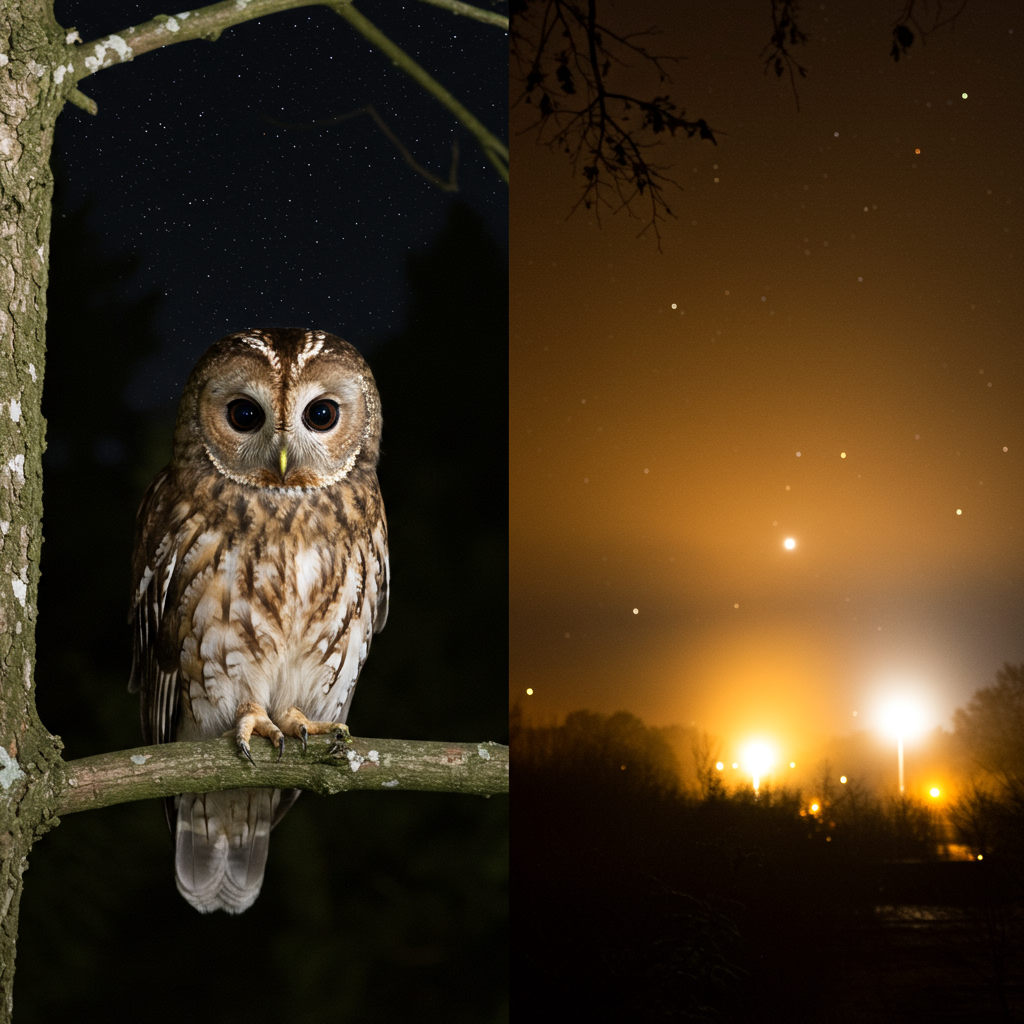
Light pollution, the excessive or inappropriate use of artificial light, is increasingly recognized as a significant environmental problem. While often overlooked, its impact on nocturnal wildlife and ecosystems is profound, disrupting natural behaviors and threatening biodiversity. This article explores the pervasive effects of light pollution and highlights the importance of mitigating its impact.
For millions of years, the natural cycle of day and night has governed life on Earth. Nocturnal animals have evolved intricate adaptations to thrive under the cover of darkness, relying on the dim light of the moon and stars for navigation, foraging, and communication. Artificial light disrupts these finely tuned systems. Imagine a bat, expertly navigating by echolocation, suddenly confused and disoriented by the glare of a streetlight. This disruption can lead to decreased foraging efficiency, increased predation risk, and habitat fragmentation.
The impact extends beyond individual animals. Light pollution can disrupt entire ecosystems. Sea turtle hatchlings, for example, instinctively navigate towards the brightest horizon, which historically was the moonlit ocean. Artificial lights from coastal developments often draw them inland, leading to dehydration, predation, and death. Similarly, migrating birds can become disoriented by city lights, colliding with buildings or becoming exhausted and vulnerable.
Insects, a crucial part of many food webs, are also significantly affected. Artificial lights attract and trap vast numbers of insects, disrupting their natural behaviors and depleting their populations. This, in turn, impacts the animals that rely on them for food, creating a cascading effect throughout the ecosystem.
The good news is that light pollution is a reversible form of environmental degradation. Simple solutions can make a significant difference. Shielding outdoor lights to direct light downwards, using low-intensity bulbs, and implementing “lights out” programs can drastically reduce the amount of artificial light spilling into the environment. Choosing warm-toned lights instead of cool-toned lights also minimizes disruption to nocturnal wildlife.
Addressing light pollution is not just about protecting wildlife; it also benefits humans. Excessive artificial light can interfere with our sleep patterns, disrupt our circadian rhythms, and contribute to skyglow, robbing us of the beauty of a starry night. By taking steps to reduce light pollution, we can create healthier environments for both ourselves and the natural world. The future of our planet’s nocturnal ecosystems depends on our commitment to embracing darkness and mitigating the blinding effects of artificial light.