
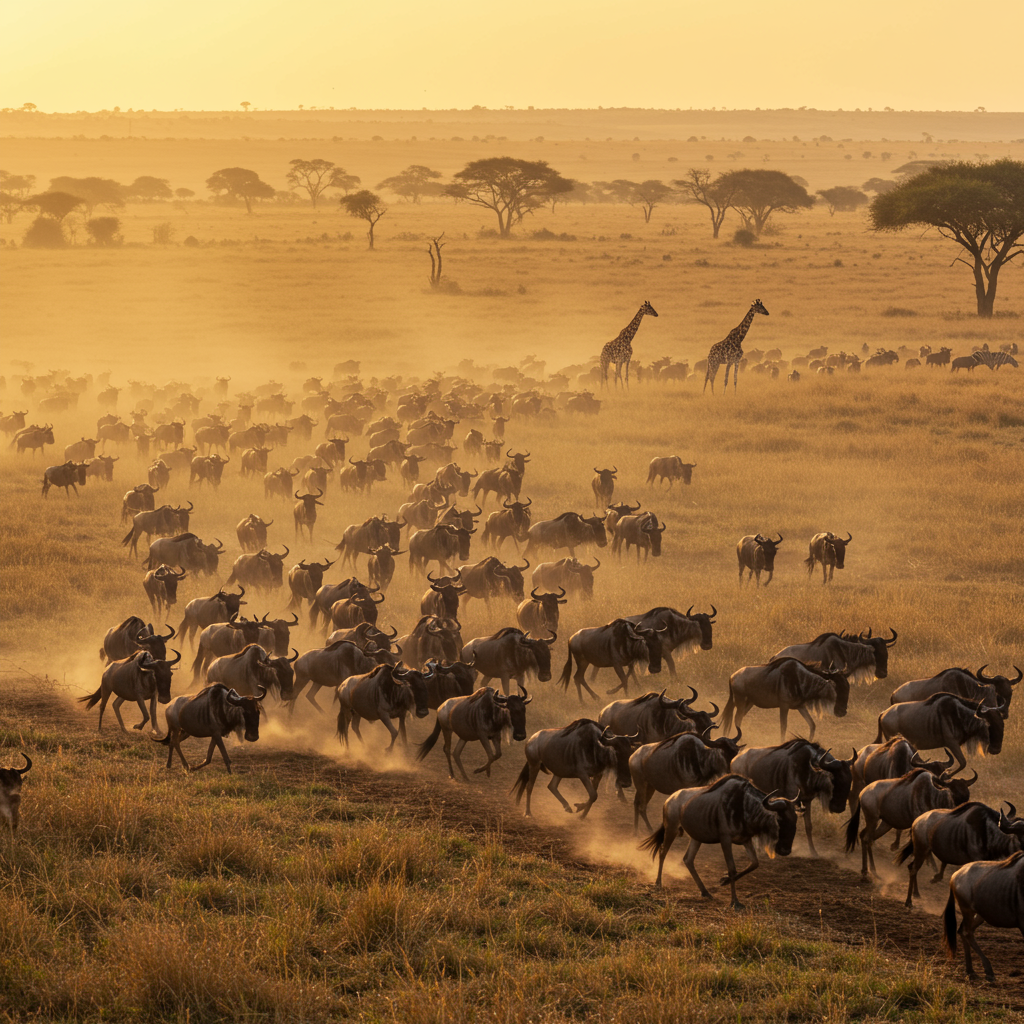
The natural world pulsates with the rhythm of life, and perhaps nowhere is this more evident than in the breathtaking phenomenon of animal migration. Across vast distances, by land, sea, and air, creatures great and small embark on epic journeys driven by an ancient imperative: survival. From the thunderous hooves of wildebeest traversing the African savanna to the delicate wings of monarch butterflies fluttering across continents, these migrations represent a testament to the power of instinct and the interconnectedness of our planet.
Consider the awe-inspiring spectacle of the Serengeti wildebeest migration, a cyclical odyssey involving millions of these ungulates, accompanied by zebras and other grazers, as they follow the rains in a relentless pursuit of fresh grazing lands. Their journey is fraught with peril, with hungry predators like lions and crocodiles lying in wait. Yet, the sheer scale of the migration, the dust clouds rising on the horizon, and the constant movement create a scene of unparalleled natural drama. This spectacle reminds us of the raw, untamed beauty of the natural world.
Equally remarkable is the migration of the monarch butterfly, a fragile insect that undertakes a multi-generational journey of thousands of miles from North America to Mexico. How these delicate creatures navigate with such precision remains a scientific marvel, a testament to the power of evolutionary adaptation. Their arrival in the oyamel fir forests of Mexico, where millions of butterflies cluster together, transforming the trees into vibrant orange tapestries, is a sight that inspires wonder and a deep appreciation for the interconnectedness of life.
The oceans, too, are alive with migratory wonders. Humpback whales, for instance, undertake some of the longest migrations of any mammal, traveling from their feeding grounds in polar regions to warmer waters to breed and calve. Their haunting songs, echoing through the depths, are a reminder of the complex communication systems that exist within the animal kingdom. Salmon, driven by an innate homing instinct, swim upstream against powerful currents to return to the very streams where they were born, a powerful symbol of perseverance and the cyclical nature of life.
These migrations are not merely fascinating spectacles; they are crucial for maintaining the delicate balance of ecosystems. They play a vital role in seed dispersal, nutrient cycling, and predator-prey relationships. However, these incredible journeys are increasingly threatened by human activities, including habitat loss, climate change, and pollution. Understanding and protecting these migratory pathways is not only essential for the survival of these species but also for the health of our planet.
Witnessing an animal migration is a profoundly moving experience. It connects us to the larger rhythms of the natural world and reminds us of the intricate web of life that sustains us all. By appreciating and protecting these amazing journeys, we safeguard not only the future of these incredible creatures but also our own.


