
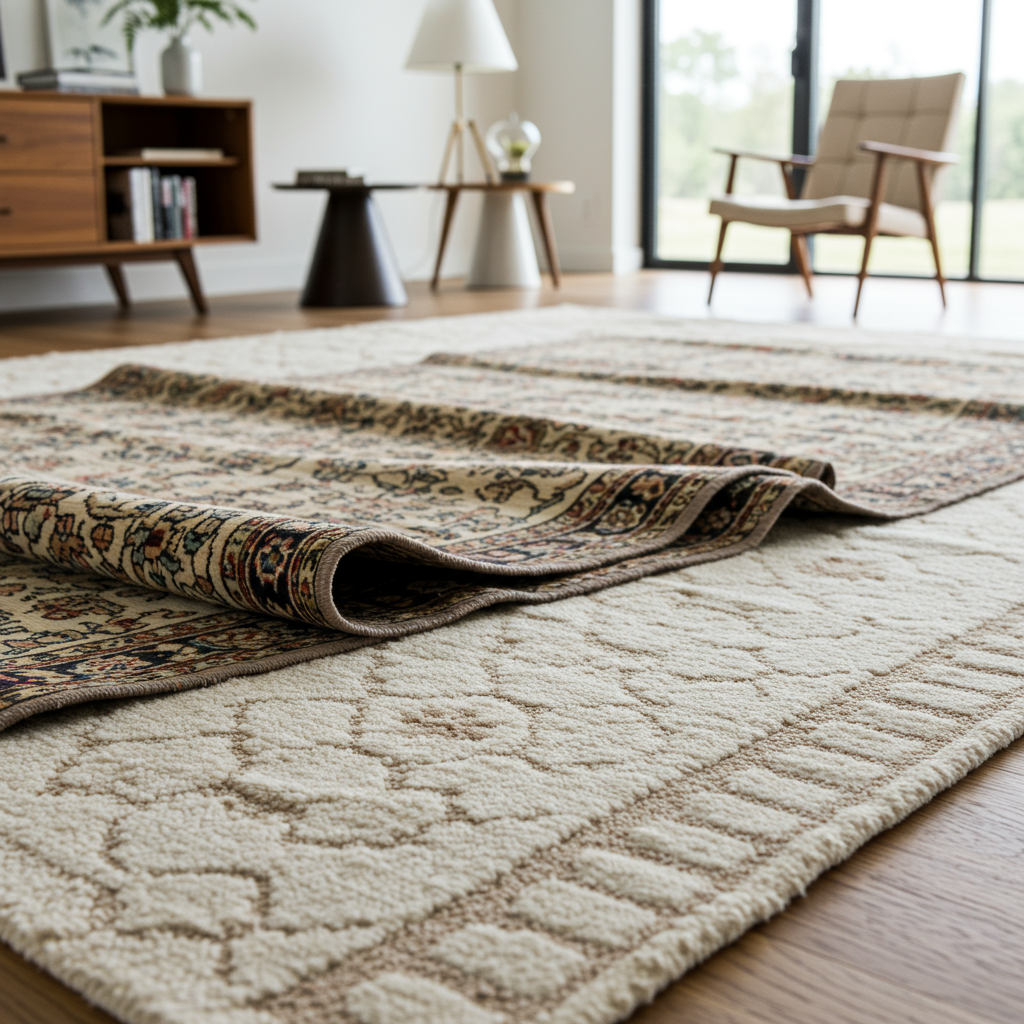
Layering rugs is more than just a trend; it’s a powerful design technique that can completely transform a room. By strategically combining different textures, patterns, and sizes, you can add depth, warmth, and a touch of personality to your floors. This comprehensive guide will delve into the art of rug layering, exploring the principles, practical tips, and creative possibilities to help you master this interior design skill.
Defining the Foundation: The first step in successful rug layering is selecting the right base rug. This rug will anchor the space and serve as the canvas for your layered look. Opt for a larger rug, preferably one that extends beyond the main furniture grouping. Neutral colors and subtle patterns work best for the base rug, allowing the layered rugs to stand out. Consider materials like jute, sisal, or a low-pile wool rug for a durable and versatile foundation.
Adding Dimension with Texture: Once your base rug is in place, it’s time to introduce texture and visual interest. Layering a smaller rug with a contrasting texture on top of the base rug creates a dynamic focal point. Think of combining a chunky wool or sheepskin rug over a smooth jute rug, or a patterned kilim rug over a natural fiber rug. The interplay of textures adds depth and creates a cozy, inviting atmosphere.
Playing with Patterns and Colors: Layering rugs provides a fantastic opportunity to experiment with patterns and colors. While the base rug should ideally be neutral, the layered rugs can introduce bolder patterns and vibrant hues. Consider the existing color palette of your room and choose rugs that complement or contrast with the overall scheme. Don’t be afraid to mix and match different patterns, but ensure there’s a cohesive element that ties them together, such as a shared color or motif. A geometric rug layered over a floral rug, or a striped rug over a solid-colored rug can create a visually stunning effect.
Defining Zones and Functionality: Beyond aesthetics, rug layering can also serve a practical purpose by defining different zones within a larger space. In an open-plan living area, for instance, you can use layered rugs to delineate the living room from the dining area or create a cozy reading nook. This helps to visually break up the space and create a sense of order and flow.
Size and Placement: The size and placement of your layered rugs are crucial for achieving a balanced and harmonious look. The top rug should be significantly smaller than the base rug, leaving a border of the base rug visible. Center the top rug on the base rug or slightly off-center, depending on the layout of your furniture. Avoid layering rugs that are too similar in size, as this can create a cluttered and unbalanced look.
Maintenance and Care: Layering rugs can sometimes pose challenges in terms of cleaning and maintenance. Regular vacuuming is essential to prevent dust and dirt from accumulating between the layers. For deeper cleaning, it’s best to separate the rugs and clean them individually according to their specific material requirements. Using rug pads can also help to protect the rugs from wear and tear and prevent them from slipping.
By mastering these principles and techniques, you can transform your floors from simple surfaces into stylish and expressive elements of your interior design. Rug layering offers endless possibilities for creativity and personalization, allowing you to curate a space that truly reflects your unique style and taste.